
Boom, bust or a bit of both: as the jury bides time before ruling on the US 'recession', the economy's vital signs at a perplexing time of high-interest rates, still-punishing inflation, and surprisingly strong economic gains are a study of a growing debate over whether the world's largest economy is barrelling into a new downturn. With the US Federal Reserve's (Fed's) inflation fighters attempting the risky pursuit of 'pillow-soft landings' and its economy sending out mixed signals, if there is indeed a recession, it could spell trouble for domestic equities and corporate earnings growth.

The National Stock Exchange (NSE) has received Rs 300 crore from the Securities and Exchange Board of India (Sebi) following relief from the Supreme Court (SC), which is hearing an appeal by the market regulator in the colocation case. The court on March 20 asked Sebi to return Rs 300 crore to the NSE from the Rs 1,107 crore the exchange had deposited as part of the disgorgement in the case. The NSE had given an undertaking that it will return the entire amount to Sebi if the latter wins its appeal before the SC.

State-owned Life Insurance Corporation of India (LIC), which completes one year of its listing on Tuesday, presents a sorry scorecard as far as its stock market performance goes. Shares of the insurance behemoth are down 40 per cent over their issue price of Rs 949 to Rs 567 apiece. The Sensex, on the other hand, has risen 14 per cent in the past one year.

The Central Board of Direct Taxes (CBDT) on Monday clarified that any deposit in the form of bonus or incentives credited in a user account will be considered net winnings, and subject to tax deduction, in case of withdrawal. If these are used only for playing, then it's not liable for tax deducted at source (TDS). Further, in case net winnings do not exceed Rs 100 a month, the applicable tax need not be deducted.

The infighting between the two promoters of Hikal-Baba Kalyani and sister Sugandha Hiremath-has put the company's growth at stake, InGovern has said in a note. The corporate governance firm has called for a change in the management and an overhaul of its board to protect the interest of minority shareholders, who own almost a third of the specialty chemicals company. The Kalyani and Hiremath families are mired in a legal dispute, with the latter seeking transfer of ownership of shares held by the Kalyani group, citing nearly three-decade old family arrangement.

Sebi is learnt to have written to several regulators including those in Bermuda, Luxembourg, and Switzerland, seeking detailed information on some FPIs.

With markets getting back their mojo after four months, small- and mid-cap shares raced ahead of large caps in April. The Nifty Smallcap 100 index surged 7.5 per cent - its biggest monthly advance in 10 months - and outperformed the benchmark Nifty 50 index by 350 basis points. The Nifty Midcap 100 index soared 5.9 per cent, most since August.

The Reserve Bank of India's (RBI's) decision on Wednesday to relax restrictions on banks operating in the International Financial Services Centre (IFSC) related to the repatriation of idle funds in foreign currency accounts (FCA) could give a fillip to trading in foreign stocks at the GIFT City.

To further tighten its control of practising accountants, the Centre has brought within the ambit of the Prevention of Money Laundering Act (PMLA) their "financial transactions" such as operating and managing their client firms and trusts, and buying and selling business entities. The Union finance ministry issued a gazette notification on this on Wednesday. Under the new rule, chartered accountants, company secretaries, and cost and works accountants carrying out such transactions (on behalf of their clients) will now be required to go through the Know Your Company (KYC) process before commencing work.

Actively managed mutual fund (MF) schemes had been at the receiving end over the past few years for their inability to beat their benchmarks. However, the slump in shares of Adani Group companies - two of which are part of the benchmark National Stock Exchange Nifty50 index - have helped them improve their performance vis--vis exchange-traded funds (ETFs) or index funds.

Notwithstanding sharp volatility in March, mutual fund (MF) investors didn't fight shy of investing in riskier small-cap-oriented schemes. Inflows into small-cap funds were not just the highest in absolute terms, they were also the maximum as a proportion of assets under management (AUM) among all market capitalisation (m-cap)-oriented categories. Investors funnelled Rs 2,430 crore down small-cap funds - 1.8 per cent of their AUM of Rs 1.33 trillion.
NSE Indices on Wednesday changed the methodology for handling schemes of demerger involving index constituents. The index provider said a company undergoing demerger would now be retained in its indices. The move comes ahead of the proposed demerger of Reliance Industries' (RIL's) financial services arm. Under the rules prevailing thus far, RIL -- which has the highest weighting among the 50 Nifty components -- would have been required to be removed from the index, resulting in a churn by funds tracking the Nifty index.

Expanding investigation into allegedly wrongful claims of input tax credit by insurance companies, the tax authorities are probing a section of automobile dealers who have supposedly generated fake invoices without providing any service, which is a punishable offence under goods and services tax (GST) law. The authorities are learnt to have questioned the car dealers to explain the services they provided general insurance companies. The investigators suspect car dealers pitched for insurance schemes that give them commissions in excess of those insurance regulations permit.
Two listed firms belonging to the Baba Kalyani Group (BNK Group) have contested their inclusion as parties in a suit pertaining to family dispute over ownership of chemical firm Hikal. The co-promoters of the company - Kalyani and Hiremath families - are mired in a legal dispute, with the latter seeking transfer of ownership of shares held by the BNK Group, citing nearly three-decade old family arrangement. An affidavit filed in reply to Hiremath's suit petition in the Bombay high court, BF Investment (BFIL) and Kalyani Investment Company (KICL) have stated that they are separate and distinct legal entities and were not even incorporated and party to the 'family arrangement'.

The country's largest bourse National Stock Exchange (NSE) has put the NSE Prime initiative in cold storage following lukewarm response from India Inc, said people aware of the development. Inspired by Brazil's Novo Mercado, NSE had announced a separate platform which any listed company could be part of by voluntarily adopting a stricter corporate governance code. Launched in December 2021, NSE Prime was to formally take off within a year after empanelling companies.

'Given that debt AIFs, by nature, target a higher portfolio return, it is likely to attract investors like HNIs, family offices, etc, looking for a higher yield debt product.'
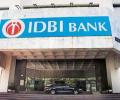
The government and Life Insurance Corporation's (LIC's) strategic stake sale in IDBI Bank is expected to move to the second stage by the first quarter of FY24, said two people in the know. They added that considering the progress of the ongoing deal, financial bids are expected to come in by June this year. The proposed IDBI Bank stake sale is divided into two sequential stages.
Overhaul of the goods and services tax (GST) structure, including possible changes in the tax slabs, may now be taken up only after the 2024 Lok Sabha elections, given the number of states that are going to the polls in its run-up. "No major overhaul of tax rates is expected in GST until the end of next fiscal year. One major reason for this is that some members of the group of ministers (GoM) - mandated to look at rate rationalisation by the GST Council - are from poll-bound states. Later, this may lead to reconstitution of the panel," a senior government official told Business Standard. Besides, both the Centre and states are not in favour of frequent changes in the tax rates amid inflationary uncertainties; they believe any major change should be brought in after extensive deliberations, according to the official.

Mumbai, which adds 37 per cent to the total direct tax mop-up, has reported tax collection of Rs 4.93 trillion so far, against the full-year target of Rs 5.35 trillion.

Analysts say domestic banks' dependence on local depositors insulates them from the crisis.
 © 2026 Rediff.com - Advertise with us - Disclaimer - Privacy Policy - Sitemap - Feedback - About us - Terms of use - Grievances